
My Birthday Reflection: Why I Do This Work
A reflection on family, community, and the responsibility that shaped my life

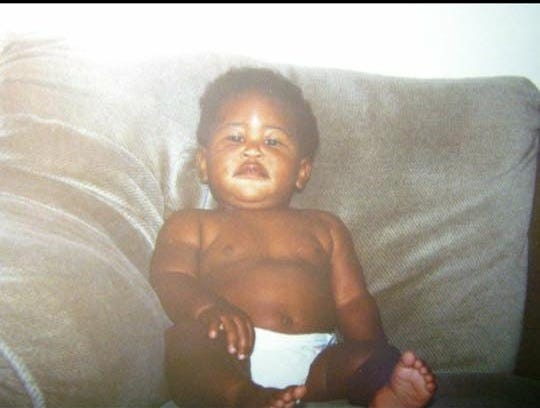
My birthday recently passed (January 25th) and it feels like a good moment to share more about who I am and why I do this work. While this might feel like a break from my political writing, for me, the binary between my personal self and political self does not exist. If you stick around to the end — or skip ahead — there will be an ask for support.
But the most natural place to start for me, is to just say that I have always struggled to answer the simple question of “why do I do this work?” Not because my “why” is hard to identify, but because trying to explain it often feels like being asked why I need to breathe air, or why a fish chooses water. This way of living, of giving, sacrificing, and loving community, has been part of my life for as long as I can remember.
I’ve written about how being failed by systems and reading has shaped who I am, but I learned how to sacrifice myself for something bigger than myself and how to love and support anyone in need through the daily actions of my family. And I was instilled with a deep sense of responsibility from a very young age, especially by the women in my life who constantly challenged me to be a better man (there’s a longer story here, about the challenges of being “the man of the house” has a baby boy, but that’s for another day.)
I started here intentionally. Because while my family’s experiences with violent systems — prison, poverty, communal violence, and intimate partner violence — shaped the political analysis I carry today, I know that without the foundation my family and community built early on, those experiences could have been ignored, misunderstood, suppressed, or left unused.
For me, the systems thinking and political analysis came later. The values came first.
The state violence my Grandpa Henry and my father James experienced shaped my life — and the lives of everyone in my family. So did the daily harm the women in my life were forced to navigate under patriarchy. But it was the values that shaped who I became. Values birthed into me by my aunties and uncles — Yoli, Mushy, Devon and Dave. My grandmother Sylvia. My mother Rebecca. And my three little cousins/brothers — Jeziah, Xzaveon, and Dreydon.
When I think about why I care so deeply about community, the question almost feels backwards. It brings a tidal wave of experiences, observations, and pain to the surface. That simple question — why do you do this work? — has always felt overly complicated to answer.
Do I tell them my Pops did 24 years in prison — and that for ten of those years, I couldn’t hug him because of unjust laws?
Do I tell them I watched the hardest working person I know — my mother — work two or three jobs and still struggle?
The list could go on and on. But what actually grounded me was the way my family lived and breathed life into the phrase “we got us” — both our chosen family and those within our broader community. It wasn’t something we talked about. It was something we lived.
At one point, I lived in what we called the family house, and it often ranged between 10–12 people under one roof. And that didn’t include the occasional family member who needed somewhere to land for a while.
It was common for an uncle or auntie who was struggling to stay in my room while my grandma cooked for them and cared for them until they could get back on their feet.
It was also common practice that anyone who didn’t have somewhere to go for Thanksgiving, Christmas, or the holidays was invited into the Morrison–Smith–Briones–Alvarez–Whitney house. Eventually, it became normal for me to bring friends without even asking. And I heard time and time again how the people I brought home instantly felt like they were part of the family. They would leave the family house fed, loved, and taken care of, and always with an invite to return.
But love wasn’t just extended outward. It poured into me constantly. While my mom worked, it was my aunties and extended family who watched me, fed me, took me to school, picked me up from after-school programs, took me to the movies, and made sure I was okay. There were a lot of issues west of the 805 in Chula Vista, but for the most part, I grew up inside a real, functioning community.
I’ve always told people two things:
I am who I am because I was loved by my family.
The love that was poured into me created a responsibility in me to pour that same love into others.
But alongside that beauty, there was also loss. All around us were the symptoms of communities that had been abandoned — families broken apart, neighborhoods struggling under the weight of disinvestment and neglect. Communal violence. As I’ve shared briefly, my family has its own traumas and fractures too. We weren’t untouched. But we were never fully broken in the same way.
That contrast instilled both gratitude and grief in me. Gratitude for what I had. And a deep, aching desire for my neighborhood friends — the ones struggling with drugs, homelessness, and lack of opportunity — to have had access to the same love, protection, and resources that I did.
And I understand now that even strong family and community ties can’t outweigh systemic abandonment. Love alone can’t shield us from the harms of capitalism, white supremacy, and patriarchy.
It was also never enough for me to just be the one who “made it out.” That’s often how people from the block talk about me now. Not my family — but people I grew up with. And I understand why they say it. But I’ve always known something else to be true.
If some of my friends — friends who have passed, who are unhoused, who are struggling with addiction — had received the same care I did, grown up in well-resourced communities, and been supported by systems rather than punished by them, their lives could have unfolded very differently. My boy Jake might be out traveling the world with his own travel blog. My boy Danny, who passed more than a decade ago, might have become a professional skateboarder or one of those teachers who understands the wildness in his students because he used to be that wild kid himself.
Holding those visions of what could have been for people I loved, for some of my first best friends, is what has made it impossible for me to stop caring. It’s what pushed me toward movement work. And without my family helping me understand that we are responsible for our people, I easily could have chosen to focus only on myself.
What continues to drive my commitment to expanding that kind of community while transforming policies and systems so that nobody gets left behind — whether they came from a family like mine, or not. Because at the end of the day, people are not disposable. Nobody is beyond care. And community should not be something you have to be lucky to experience.
We all deserve to grow-up in healthy communities and be supported by strong systems of support so that all of our people are cared for — regardless of country, state, or zip code. So that people have the opportunity to live full, dignified lives and reach their potential.
When I talk about the need to radically change society — when I talk about revolution — it’s love driven and comes from a deep belief that we are responsible to each other and our communities. And if we’re serious about that, then we have to build a new culture and new systems that reflect this truth, so that community becomes a collective and daily practice, not a distant ideal.
Final Ask Section
If you’ve made it this far, thank you for reading, and for being in conversation with me through this writing.
Over time, I’ve realized that one of the places where I feel most useful in the movement is helping create space to reflect, process my internal thoughts, and struggle through the contradictions of the world. And that’s what this writing has become for me. Not a place where I have everything figured out — but a place where I can reflect honestly, struggle through my thinking, and challenge myself in public, in the hope that others will think, question, and wrestle alongside me.
Writing like this is a labor of love for me. And every time someone writes me to say that something I shared helped make an issue more accessible, or helped them think through organizing challenges, it pushes me to keep going.
But I also lead a large statewide network that asks a lot of me. I support family. And like most people, I’m working with too little time in my day. A lot of this writing happens at 5 a.m. — for the love of the craft, and for the love of my people. But material support does help.
If this writing has helped you think, feel less alone, sharpen your politics, or put words to things you’ve been carrying, there are a few ways you can support this work:
If you’re able, becoming a monthly paid subscriber helps me protect time and space to keep writing like this.
If paying isn’t accessible or just isn’t your thing, sharing my writing with a friend, a colleague, or someone you think would resonate with it goes a long way.
And if you’re part of a community, organization, classroom, or space where these conversations would be useful, you can invite me in. I care deeply about these ideas living in real rooms with real people, and I genuinely love being in community. It’s one of the things that fills my cup.
I won’t make a habit of asking like this. But if this writing has meant something to you, and you want to help sustain it, I’m grateful for that support in whatever form it takes.
Thank you for reading. And thank you for being part of this community with me. Nobody makes it alone. We got us