
Enemy Force #4: Failure to Study Revolutionary Theory and the Experience of Other Revolutionaries
We must study revolutionary history.

Recently, I came across a thread where someone argued that studying revolutionaries of the past isn’t necessary. The claim was that it’s up to us to become the revolutionaries of the moment—to rely on creativity, intuition, and new thinking to build something entirely different.
There’s a partial truth here. Every generation has to respond to its own conditions. No revolution can simply be copied and pasted. Creativity and imagination are required, both for our tactics and for projecting a new vision for society.
But as I kept reading and reflecting on what I hear so often from others, something else surfaced. A kind of individualism that assumes we are so uniquely brilliant, so historically unprecedented, that nothing before us has anything to teach us. This framing sounds empowering, but it’s deeply liberal and egotistic (another enemy force we will discuss in later sections) and carries real risks that we must consider. It assumes that we have nothing to learn from the ancestors whose shoulders we stand on, and that revolutionary praxis comes from individual insight rather than collective struggle and learning across time.
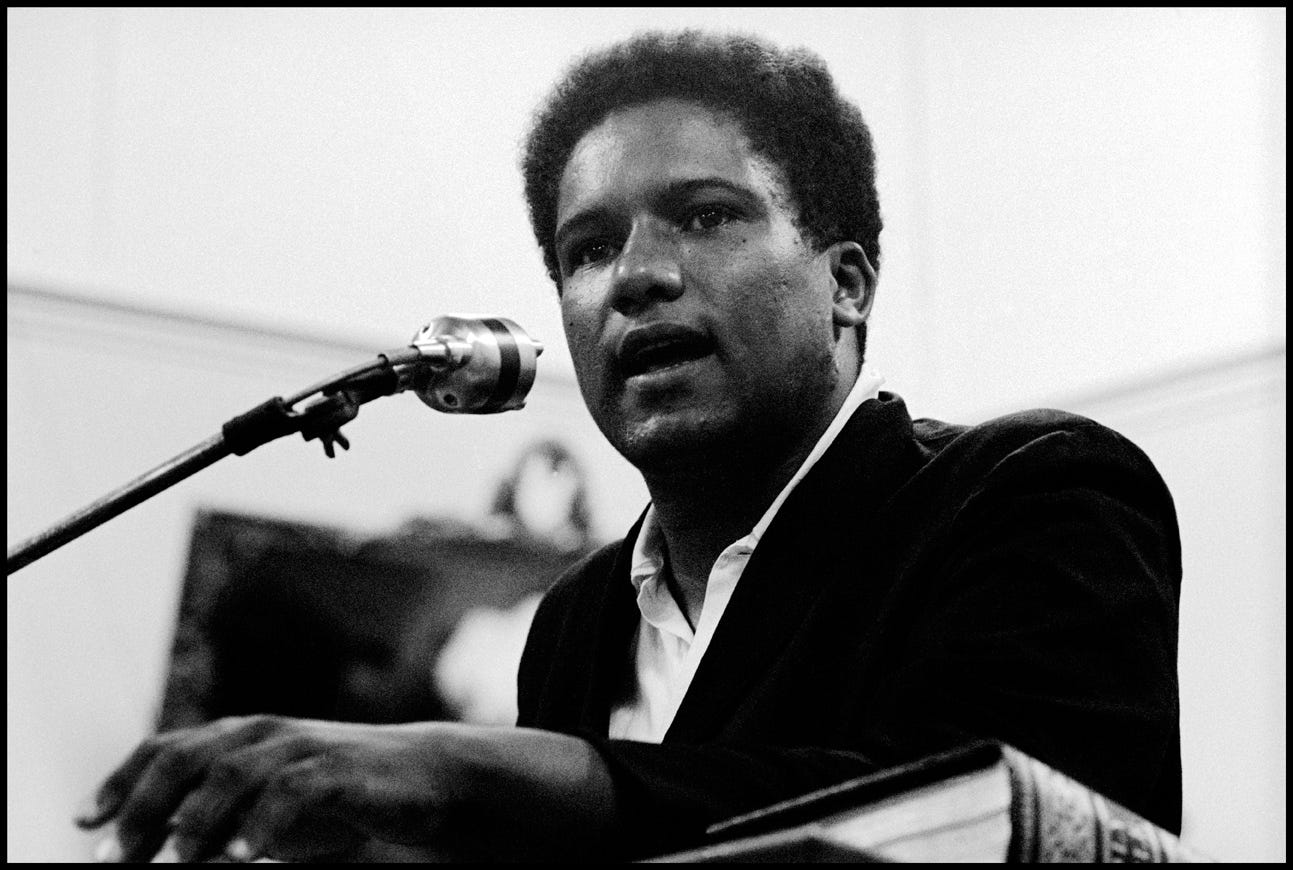
Forman provides clarity here by reminding us that serious revolutionaries do not reject theory or history. They study it—not as a blueprint, but as a way to strengthen their own fight and avoid repeating the failures of the past under new names.
Studying revolutionary history is not just about learning what went wrong or avoiding past mistakes. It teaches us what revolution actually is. Revolutions are not only about dismantling violent systems or correcting historical injustices—they are also about creation. They are about building new forms of collective life: community-based institutions, systems of self-governance, and shared visions for how people can live with dignity beyond capitalism, white supremacy, imperialism, and all forms of domination.
Without studying revolutionary history, it’s easy to reduce revolution to destruction alone. But history shows us that overthrow without construction will not lead to liberation and will likely reproduce the same harm we experience today.
Many movements have seized power or disrupted existing systems, only to falter soon after. Often this wasn’t because people lacked courage, but because movements were unable to project a positive vision of what they were building toward, were unprepared to govern collectively and democratically, struggled to sustain mass participation, or failed to defend gains against inevitable counterrevolution.
Revolutionary history also reminds us that struggle is protracted and built over generations. Revolutions rarely happen spontaneously, even when they appear that way. What looks like a single explosive moment is usually the product of years—often decades—of organizing, political education, material shifts, and disciplined preparation. Without studying that process, we mistake spectacle—a mass mobilization, a one-day walkout, even a summer of protest—for revolutionary struggle, rather than the slow and unsexy work of organizing and meeting people’s tangible needs long after the moment of rage has passed.
The Civil Rights Movement did not emerge fully formed—it unfolded in phases stretching back to Black Reconstruction. The Russian Revolution is often remembered as a single moment in 1917, yet it was preceded by decades of organizing, failed uprisings, repression, and regrouping. Without this historical grounding, losses feel like final defeats rather than expected moments in a long struggle. History teaches us that even when battles are lost, seeds can be planted for future revolutionary action—people politicized, capacity is built, relationships deepened, consciousness sharpened.
Studying revolutionary theory also prepares us for what comes after victory: counterrevolution, backlash, and intensified repression. Black Reconstruction and decolonial fights in Africa and across the Global South show us how quickly gains can be reversed when movements are unprepared for that next phase. Studying revolutionary history helps us build not just the courage to disrupt, but the discipline, patience, and foresight required to win—and helps us recognize that the “win” simply brings another stage of struggle that must be defended and expanded.
Forman also challenges another idea that shows up frequently today: that direct experience with oppression automatically produces revolutionary consciousness. Lived experience matters. People closest to harm often see things others cannot. But experience alone does not prepare someone to transform society or project a coherent vision for where we need to go.
You can experience oppression and still be reactionary. You can experience harm and still reproduce harmful ideas, especially in the West where propaganda is embedded in every part of our lives. Lived experience becomes transformative only when it is connected to collective struggle, political education, and reflection grounded in material analysis.
Revolutionary history shows us that successful movements organized people who were marginalized, illiterate, or not initially “political” into disciplined forces capable of winning real gains. That transformation did not happen automatically. It required relationships, trust, accessible political education, and participation in struggle itself.
Forman also rejects the idea that movements should only study thinkers or revolutions that look like them. Even when focused on Black liberation, there are lessons to be learned from Vietnam, China, Cuba, Russia, and elsewhere—not as rigid models, but as sources of insight into protracted struggle.
I don’t believe this means we must read every single piece of revolutionary history, or that we must agree with everything we consume. But I do believe refusing to study and learn from various sources is a political mistake. Personally, I try to learn from everything—friends, enemies, books, rivers, trees—because I assume there is something to be learned everywhere if we’re open and looking for the lesson.
Ella Baker, someone James Forman learned from and organized alongside, once said, “In order to see where we are going, we not only must remember where we have been, but we must understand where we have been.”
That is why we must study the ins and outs of those who came before us—not to replicate their paths, but to understand how they organized, struggled, adapted, and endured. Only then can we meaningfully engage in the art and science of building a revolutionary movement capable of meeting this moment.
Our ancestors helped build the road many of us now walk. Our responsibility is not to start from scratch, but to build upon their work—learning from their victories and their mistakes. That doesn’t require copying their methods wholesale. It requires study, adaptation, creativity, and imagination—alongside the discipline to pass forward what we learn so the next generation doesn’t have to begin again.
Ten-Out-of-Ten Study & Struggle Questions
What does revolutionary history actually teach us about the limits of large mobilizations and general strikes—not just their potential?
What specific forms of organizing, relationship-building, leadership development, logistics, and political education made those moments possible in the first place? Logistics matter here, and they are often the most neglected part of the story.
In historical examples we celebrate, what concrete structures existed before mass action that allowed people to sustain risk, repression, and sacrifice—and what structures were required after to defend the win?
Where did movements fail after peak moments, and what organizational gaps (discipline, coordination, internal democracy, material support) made those failures likely or inevitable?
What kinds of political education helped people move from participation driven by anger or crisis into long-term commitment, responsibility, and disciplined organizing?
What parts of revolutionary history are we avoiding because they challenge our current liberal habits—and what might that refusal be costing us right now?